
What is the Japanese Walking Method?
You've probably seen it on TikTok or heard someone mention it: the "Japanese Walking Method." But what is it, exactly?
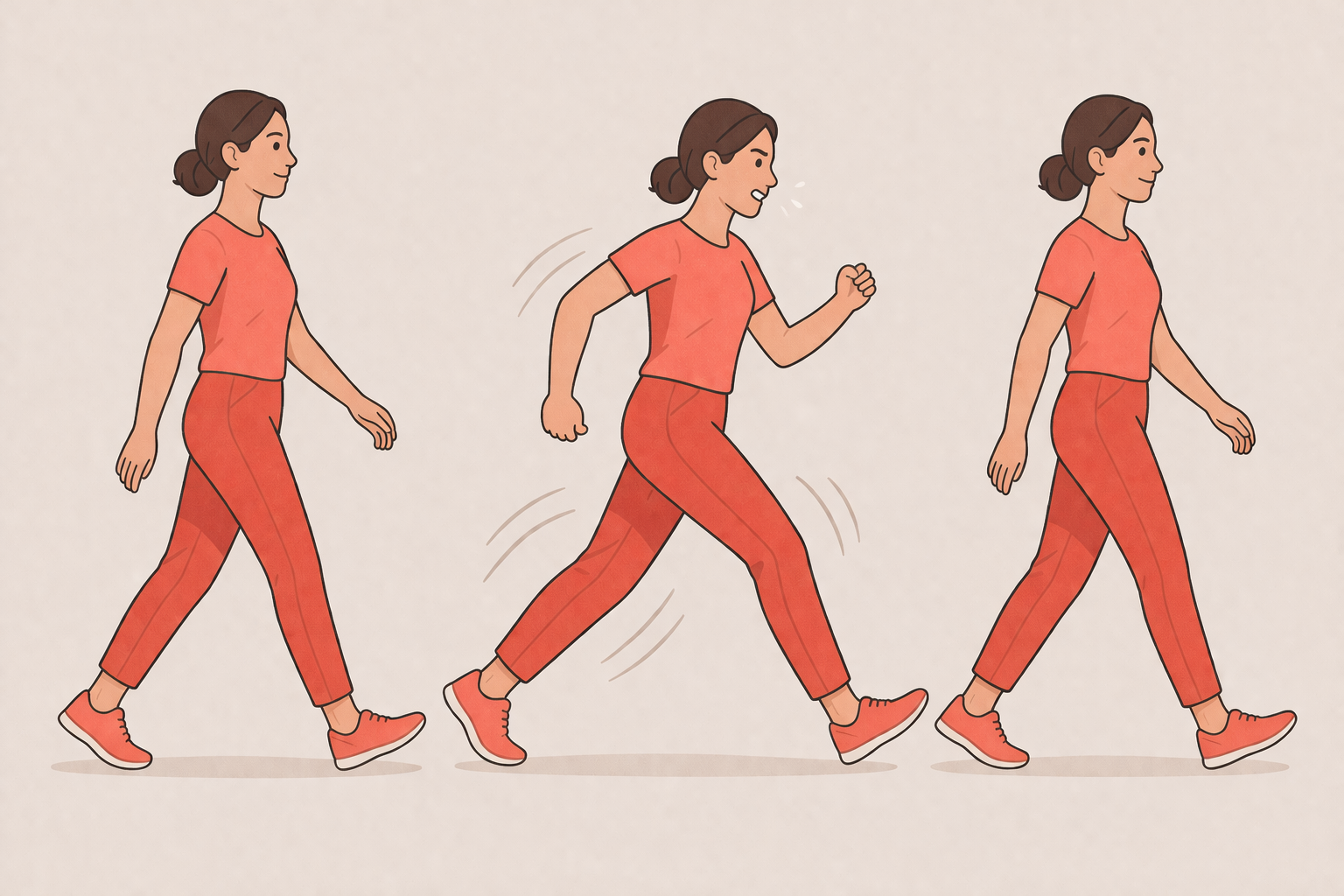
The Japanese Walking Method is a simple walking routine where you alternate between a brisk pace and a relaxed pace in three-minute intervals. You walk briskly for three minutes, then slow down to a relaxed pace for three minutes. You repeat that cycle five times, and in 30 minutes, you're done for the day.
The brisk part should feel like you're walking as if you're running late to an appointment. You can still get a few words out, but holding a full conversation would be tough.
The relaxed part is a comfortable stroll where you can chat freely without needing to pause for breath.
It doesn't require a gym membership, special equipment, or any prior experience with exercise. You just need a pair of shoes and somewhere to walk. The method was developed by Japanese researchers, and it caught on globally because the results spoke for themselves.
What Does the Research Say?
The key study behind the method followed 246 adults over five months. They were split into three groups: one that didn't walk, one that walked at a steady pace, and one that did the brisk-and-relaxed interval pattern at least five times, four or more days per week (Nemoto et al., 2007).
The difference between the steady walkers and the interval walkers was significant. The interval group developed noticeably stronger legs, improved their cardiovascular fitness, and lowered their blood pressure. Men in the interval group dropped their blood pressure by about 10 points, women by about 8. The steady walkers? They barely moved the needle (Nemoto et al., 2007).
That's a meaningful change from simply adjusting how you walk, not how long you walk.
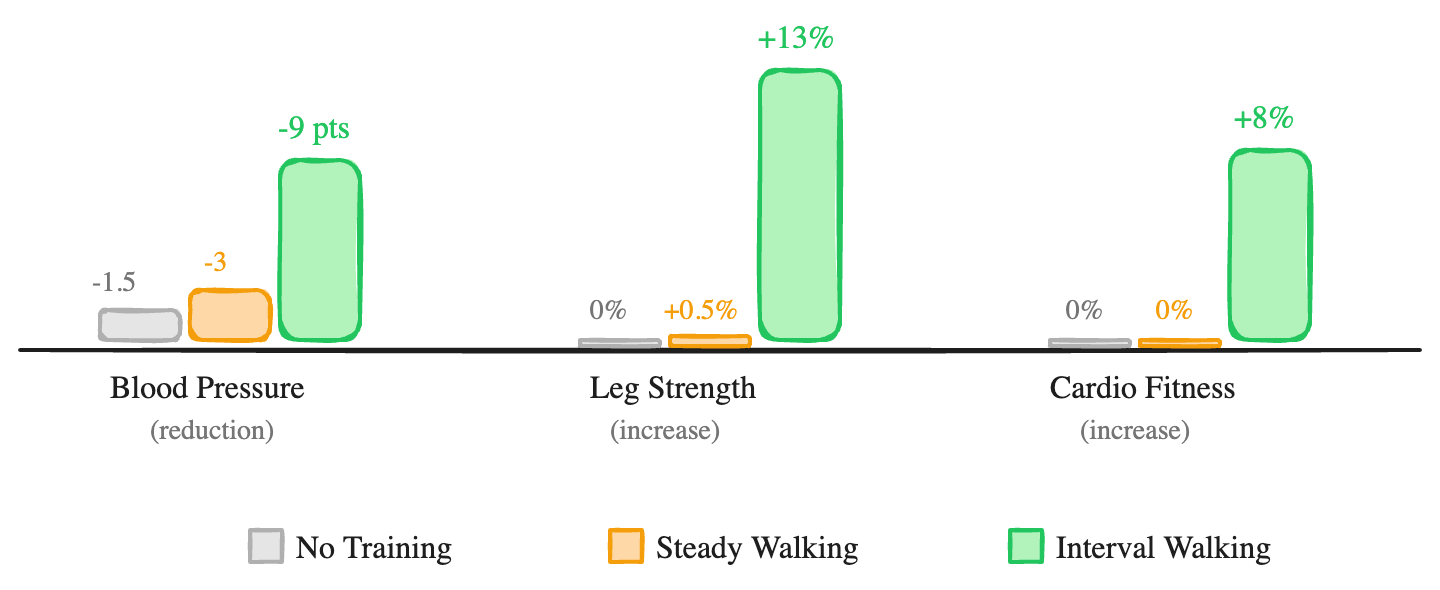
Data aggregated from (Nemoto et al., 2007).
Why does it work better than walking at a steady pace?
When you walk briskly, your heart rate and blood flow increase, which puts healthy stress on your artery walls. Over time, this helps your arteries become more flexible and better at relaxing on their own, which can lower your resting blood pressure. The relaxed intervals in between give your body a chance to partially recover, so your blood vessels get frequent, manageable doses of that healthy stress rather than one long, continuous effort (Nemoto et al., 2007).
The faster walking also places more demand on the muscles in the front and back of your thighs, the ones that support and stabilize your knees. These are the same muscles you rely on every day to climb stairs, get up from a chair, or stay steady on your feet. Over time, the repeated effort from the brisk intervals builds real, functional strength in those muscles (Nemoto et al., 2007).
Who Would It Benefit?
Before starting any new fitness routine, it's a good idea to check with your healthcare provider to make sure it's right for you.
That said, the Japanese Walking Method can work for a lot of different people.
If you've never really exercised before but want a place to start, this is one of the most approachable ways to do it. The relaxed intervals are built right into the structure, so you're never grinding through 30 straight minutes of hard effort. You push for three minutes, then you recover. If five rounds feels like too much at first, start with two or three and build up as it gets easier.
If you don't have access to a gym or equipment, this is for you. There's nothing to buy, nothing to set up, and nothing to learn before you begin.
If you're busy and time is tight, 30 minutes is all it takes. You can fit it into a lunch break, a morning routine, or an evening walk around the neighborhood.
And if you already walk regularly, this is a way to get more out of the time you're already spending. Instead of walking at the same comfortable pace the whole time, mixing in brisk intervals gives your body a reason to adapt and improve. Same walk, better results.